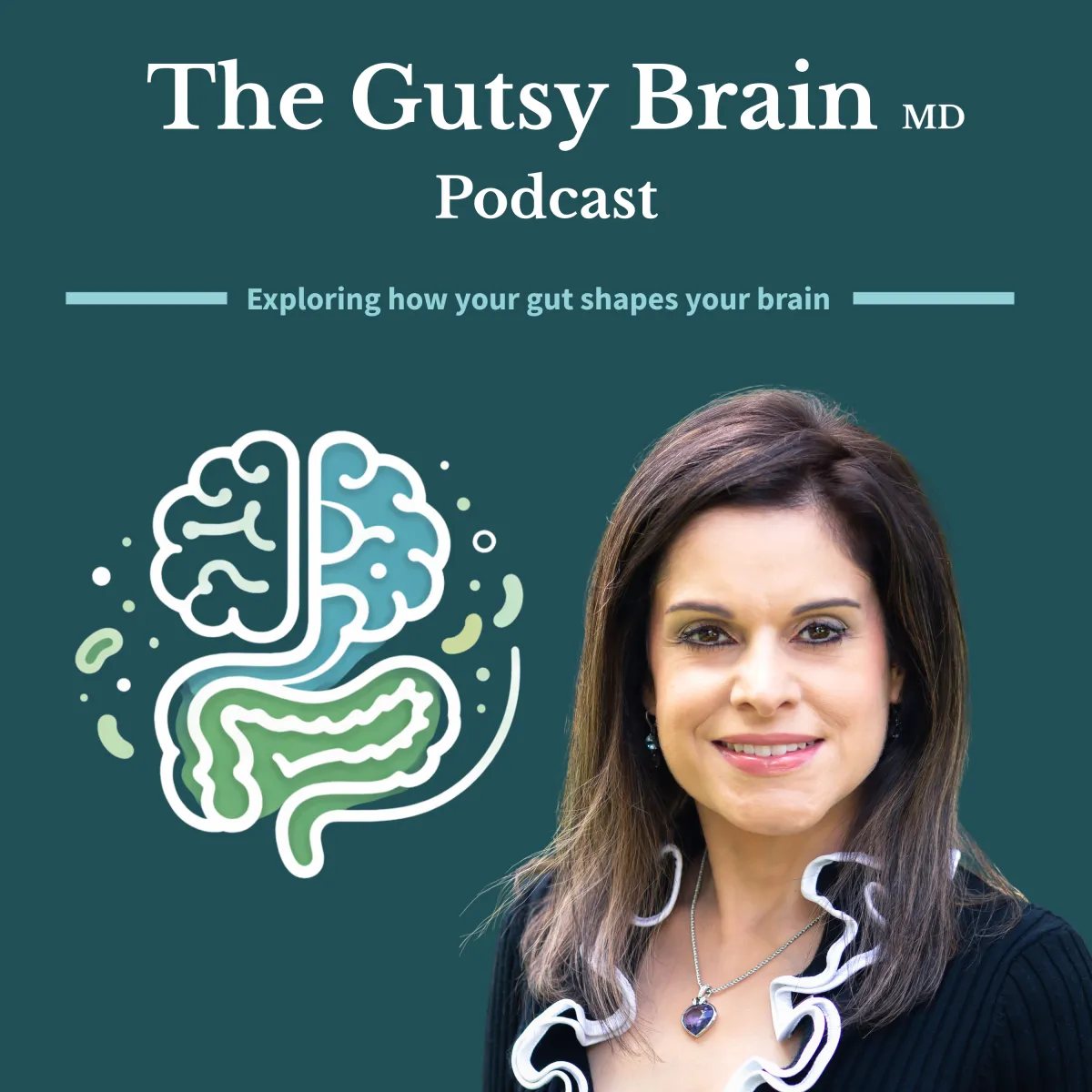
The Gut May Be the Missing Piece of Brain Health.
Hosted by:
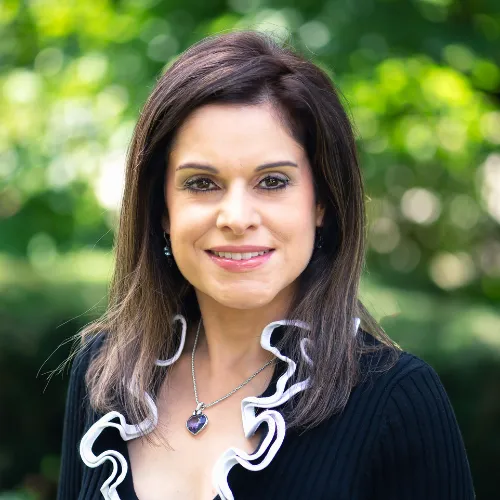
Dr. Rana Mafee, MD
The Gut May Be the Missing Piece of Brain Health.
Hosted by:
Dr. Rana Mafee, MD
Dementia CAN be prevented. But can it be REVERSED?
Dementia CAN be prevented. But can it be REVERSED?
What if everything we've been told about Alzheimer's disease and cognitive decline is only part of the story?
For decades, Alzheimer's disease has been viewed as a one-way street. Once memory loss begins, the expectation has largely been that cognitive function will continue to deteriorate. We might be able to slow the progression, but actually improve cognition? That has rarely been part of the conversation.
But what if that paradigm is beginning to change?
In 2024, a landmark report published in The Lancet estimated that nearly 45% of dementia cases worldwide could potentially be prevented or delayed by addressing modifiable risk factors.
Think about that. A disease we've long associated with aging and genetics may be far more influenced by our everyday health, lifestyle, and environment than many people realize.
But there's an even more provocative question emerging from the research:
What if cognitive decline has already begun? Is it possible to actually get better?
A growing body of research is challenging some of our longstanding assumptions about Alzheimer's disease. Investigators including Dr. Dean Ornish, Dr. Richard Isaacson, Dr. Dale Bredesen, Dr. Kat Toups, and Dr. Heather Sandison are exploring whether intensive, personalized, multidimensional interventions can do more than simply slow cognitive decline.
And some of their findings are raising fascinating questions about what we mean by reversing cognitive impairment.
In this episode of The Gutsy Brain MD, I take you through the evolving science, including some intriguing new clinical trial findings that could influence how we approach brain health in the future.
We'll explore why the conventional approach to Alzheimer's disease may be incomplete, why addressing multiple contributors to cognitive decline simultaneously could matter, and why improving cognitive function and reversing Alzheimer's pathology may be two very different things.
As a neurologist trained in integrative and precision medicine, I believe this is one of the most important conversations we can have about the future of brain health.
The science is exciting, but it's also nuanced. And while we're not YET at a point where we can claim Alzheimer's disease is fully reversible, the emerging evidence gives us compelling reasons to rethink the idea that there's nothing we can do.
Whether you're concerned about your own memory, have a family history of dementia, or simply want to protect your brain as you age, this is an episode you won't want to miss.
Because perhaps the most important question isn't just whether we can prevent Alzheimer's disease.
It's how much cognitive function we may be able to preserve—or potentially reclaim—even after decline has begun.
Key Takeaways
1. Dementia is not necessarily an inevitable consequence of aging. Research suggests that a substantial proportion of dementia risk may be modifiable, even among people with genetic susceptibility.
2. Brain health begins decades before memory loss. What you do in your 40s, 50s, and beyond may significantly influence your cognitive health later in life.
3. Cognitive decline may not always be a one-way street. Emerging research suggests that some people with mild cognitive impairment or early dementia may experience measurable improvements in cognitive performance.
4. There may be no single magic bullet. A personalized, multidimensional approach addressing multiple contributors to cognitive decline may offer benefits beyond focusing on one pathway alone.
5. Improving cognition is not necessarily the same as reversing Alzheimer's disease. Understanding that distinction is essential as we interpret promising new research.
6. It's never too early to protect your brain—and a diagnosis doesn't mean there's nothing you can do. Early identification, appropriate evaluation, and targeted interventions may make a meaningful difference.
The bottom line? We may not have all the answers yet, but one thing is becoming increasingly clear: the future of Alzheimer's care should involve more than simply waiting for cognitive decline to progress.
🎧 Listen to Episode 9 of The Gutsy Brain MD and discover why it's time to rethink what we thought we knew about dementia.
Protect your gut… protect your brain.
If you enjoyed this episode, share it with someone who might benefit from understanding the role of metabolic therapies in neurologic and psychiatric care.
Follow The Gutsy Brain MD Podcast for more evidence-based conversations about the gut-brain connection, the microbiome, and integrative approaches to brain health.
Scientific References & Further Reading
Dementia Prevention — The Lancet Commission
Livingston G, Huntley J, Liu KY, et al. Dementia prevention, intervention, and care: 2024 report of the Lancet standing Commission. Lancet. 2024;404(10452):572–628.
https://doi.org/10.1016/S0140-6736(24)01296-0
Dr. Richard Isaacson — Precision Alzheimer's Prevention
Isaacson RS, Ganzer CA, Hristov H, et al. The clinical practice of risk reduction for Alzheimer's disease: A precision medicine approach. Alzheimers Dement. 2018;14(12):1663–1673.
https://doi.org/10.1016/j.jalz.2018.08.004
Isaacson RS, Hristov H, Saif N, et al. Individualized clinical management of patients at risk for Alzheimer's dementia. Alzheimers Dement. 2019;15(12):1588–1602.
https://doi.org/10.1016/j.jalz.2019.08.198
Dr. Dale Bredesen — Early Cognitive Improvement Studies
Bredesen DE. Reversal of cognitive decline: A novel therapeutic program. Aging (Albany NY). 2014;6(9):707–717.
https://doi.org/10.18632/aging.100690
Bredesen DE, Amos EC, Canick J, et al. Reversal of cognitive decline in Alzheimer's disease. Aging (Albany NY). 2016;8(6):1250–1258.
https://doi.org/10.18632/aging.100981
Dr. Kat Toups & Dr. Dale Bredesen — Precision Medicine Interventions
Toups K, Hathaway A, Gordon D, et al. Precision medicine approach to Alzheimer's disease: Successful pilot project. J Alzheimers Dis. 2022;88(4):1411–1421.
https://doi.org/10.3233/JAD-215707
Bredesen DE, Toups K, Hathaway A, et al. Precision medicine approach to Alzheimer's disease: Rationale and implications. J Alzheimers Dis. 2023;96(2):429–437.
https://doi.org/10.3233/JAD-230467
Dr. Heather Sandison — Personalized Lifestyle Intervention
Sandison H, Callan NGL, Rao RV, Phipps J, Bradley R. Observed improvement in cognition during a personalized lifestyle intervention in people with cognitive decline. J Alzheimers Dis. 2023;94(3):993–1004.
https://doi.org/10.3233/JAD-230004
Dr. Dean Ornish — Randomized Lifestyle Intervention Trial
Ornish D, Madison C, Kivipelto M, et al. Effects of intensive lifestyle changes on the progression of mild cognitive impairment or early dementia due to Alzheimer's disease: A randomized, controlled clinical trial. Alzheimers Res Ther. 2024;16(1):122.
https://doi.org/10.1186/s13195-024-01482-z
Dr. Kat Toups & Dr. Dale Bredesen — New Randomized Controlled Trial
Toups K, Tanio CP, Hathaway A, et al. Precision medicine treatment of Alzheimer's disease: Successful randomized controlled trial. Preprints.org. Version 3, posted April 20, 2026. Preprint; not peer-reviewed.
https://doi.org/10.20944/preprints202512.2694.v3
Note: The studies referenced above represent different levels of scientific evidence, including observational research, uncontrolled clinical studies, randomized controlled trials, and preliminary findings. Although several studies report improvements in cognitive performance, these findings do not establish that the underlying pathology of Alzheimer's disease can be reversed.
Medical Disclaimer
This podcast is intended for educational and informational purposes only and does not constitute individualized medical advice. Do not discontinue or modify prescribed medications without consulting your healthcare professional.
Sign up for my newsletter to never miss a beat, get transcripts of episodes and get all the latest updates on upcoming podcast Episodes!
*DISCLAIMER: This podcast is for information purposes only. The content in this podcast and on this webpage is not intended to be a substitute for professional medical advice, diagnosis, or treatment. Always seek the advice of your doctor or qualified healthcare provider. Never disregard professional medical advice or delay in seeking it because of something you have heard on my content or website.
Want to connect?
Learn more about Dr. Rana here!
General questions?
Facebook
Instagram
LinkedIn