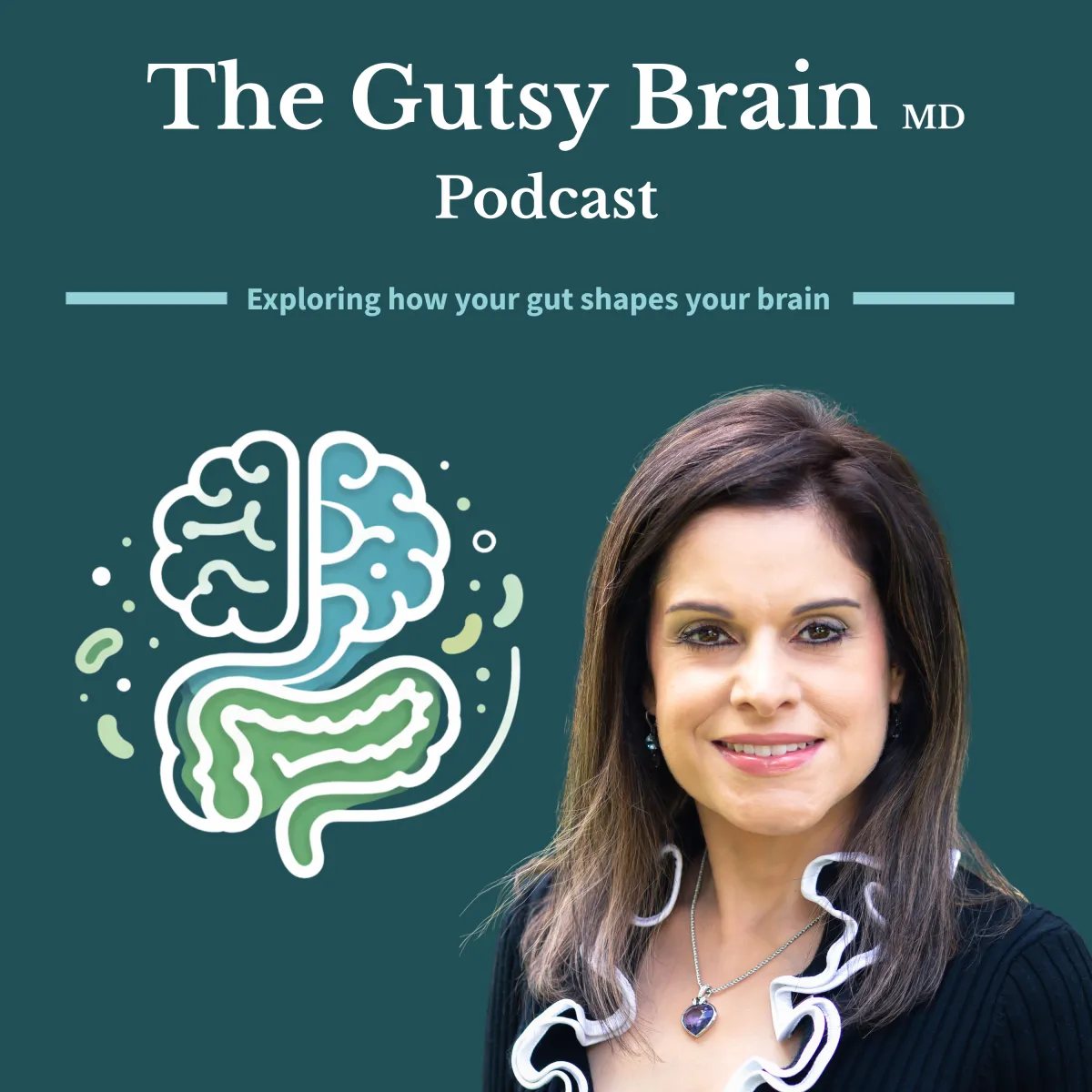
The Gut May Be the Missing Piece of Brain Health.
Hosted by:
Dr. Rana Mafee, MD
The Gut May Be the Missing Piece of Brain Health.
Hosted by:
Dr. Rana Mafee, MD
Ketogenic Diet: Fad Diet or Miracle Cure?
Ketogenic Diet: Fad Diet or Miracle Cure?
Could changing the way your brain produces energy actually help treat neurological and psychiatric diseases?
Most people associate the ketogenic diet with weight loss, bacon, butter, and cutting out carbohydrates. But what if this popular diet has the potential to do something far more profound—change how our brains function?
The ketogenic diet has actually been used in medicine for more than 100 years, originally as a treatment for epilepsy. Today, researchers are investigating its potential role in conditions ranging from Alzheimer's disease and Parkinson's disease to bipolar disorder, depression...and even schizophrenia.
In this episode of The Gutsy Brain MD Podcast, Dr. Rana Mafee, a double board-certified neurologist trained in integrative and functional medicine, explores the fascinating science behind ketogenic diets, mitochondrial health, and the emerging field of metabolic psychiatry.
Could changing the fuel we give our brains become a powerful therapeutic tool? And is the science really as promising as some claim?
Let's separate the hype from the evidence.
From Epilepsy to Alzheimer's: The Evolution of Ketogenic Medicine:
The ketogenic diet isn't a modern invention. In 1921, Dr. Russell Wilder at the Mayo Clinic helped introduce it as a treatment for epilepsy, building on observations that fasting could reduce seizures in some patients.
Today, ketogenic dietary therapy is an established treatment option for certain forms of epilepsy, particularly drug-resistant epilepsy.
But researchers are now asking a much bigger question:
If changing the body's metabolism can help control seizures, could similar metabolic interventions benefit other neurological and psychiatric conditions?
Dr. Mafee explores these questions and dives into the existing research in this episode.
The bottom line?
The science is promising, but ketogenic diets are not yet established treatments for Alzheimer's disease, Parkinson's disease, or psychiatric disorders.
Key Takeaways
1. The ketogenic diet is more than a weight-loss trend.
It has been used therapeutically for more than a century and is an established treatment option for certain forms of epilepsy, particularly drug-resistant epilepsy.
2. Your brain can use more than one fuel source.
Although the brain normally relies heavily on glucose, it can also use ketones for energy. This metabolic flexibility may have important implications for neurological health.
3. Mitochondrial dysfunction may play a role in neurological and psychiatric diseases.
Researchers have identified abnormalities in cellular energy metabolism in Alzheimer's disease, Parkinson's disease, and certain psychiatric conditions.
4. Ketones may do more than provide energy.
Emerging research suggests they may influence mitochondrial function, oxidative stress, inflammation, and neuronal signaling—although many of these mechanisms still require confirmation in human studies.
5. Early clinical research is encouraging, but not conclusive.
Small studies suggest ketogenic diets may improve certain functional outcomes, nonmotor symptoms in Parkinson's, and metabolic or psychiatric measures. However, larger randomized trials are needed to determine their effectiveness and long-term impact.
6. The quality of your ketogenic diet matters.
Achieving ketosis doesn't automatically mean you're eating a healthy diet. Prioritizing unsaturated fats, nutrient-dense whole foods, fiber, and plant diversity remains important for cardiovascular and gut health.
7. Keto is not for everyone—and it isn't a replacement for medical treatment.
Ketogenic diets can carry risks and should be approached thoughtfully, particularly when used therapeutically for neurological or psychiatric conditions.
The Bigger Picture:
Perhaps the most important lesson from this episode is that food doesn't just provide calories.
It influences our metabolism, cellular signaling, and potentially how our brains function.
The ketogenic diet reminds us that NUTRITION can be much more than a tool for weight management.
For the right patient and the right condition, it may become an important and POWERFUL component of medical care.
The future of brain health may involve not only discovering new medications, but also better understanding how nutrition and metabolism can complement conventional treatments.
Protect your gut… protect your brain.
If you enjoyed this episode, share it with someone who might benefit from understanding the role of metabolic therapies in neurologic and psychiatric care.
Follow The Gutsy Brain MD Podcast for more evidence-based conversations about the gut-brain connection, the microbiome, and integrative approaches to brain health.
Medical Disclaimer
This podcast is intended for educational and informational purposes only and does not constitute individualized medical advice. Do not discontinue or modify prescribed medications without consulting your healthcare professional.
Sign up for my newsletter to never miss a beat, get transcripts of episodes and get all the latest updates on upcoming podcast Episodes!
*DISCLAIMER: This podcast is for information purposes only. The content in this podcast and on this webpage is not intended to be a substitute for professional medical advice, diagnosis, or treatment. Always seek the advice of your doctor or qualified healthcare provider. Never disregard professional medical advice or delay in seeking it because of something you have heard on my content or website.

Want to connect?
Learn more about Dr. Rana here!
General questions?
Facebook
Instagram
LinkedIn